
A few years ago, most people probably didn’t spend much time thinking about soil health, grazing patterns or whether a tractor can get through a field without turning it into soup.
That is starting to change, partly because programmes like Clarkson’s Farm have brought farming into more everyday conversations, but also because food prices, weather, land use and energy security now feel much closer to home.
So when people ask, “what happens to the farmland?” during conversations about solar, it’s a good question. Agrivoltaics is one possible answer, because it asks whether the same field can support farming and clean energy at the same time.
How does it actually work?
Although the word sounds technical, the idea is fairly simple: agrivoltaics, also known as Agri-PV or dual-use solar, means using the same piece of land for both farming and solar energy. Fraunhofer ISE, the German solar research institute where the concept of agrivoltaics was first developed, describes it as the simultaneous use of agricultural land for food production and PV power generation, enabling efficient dual use of land without significantly using up fertile arable land.
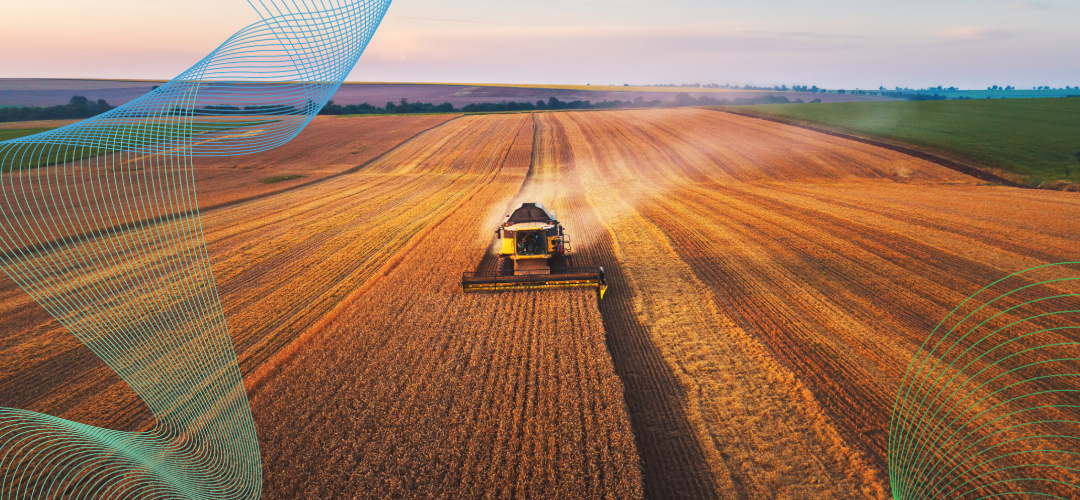
In practice, that might mean sheep grazing between panel rows, crops growing under elevated structures, or arrays arranged so that farm machinery can still move through the site. Think of it as countryside multi-storey planning: the ground floor stays in agricultural use, while the rooftop generates clean energy. Fraunhofer ISE has documented real-world agrivoltaics research across crops, fruit and other pilot applications, which helps show how adaptable the approach can be.
Agrivoltaics is not one fixed design. The right system depends on the land, the crop, the livestock, the machinery, the soil, the weather and how the site will be managed over time. Good agrivoltaics starts with the agricultural use, not as an afterthought, but as part of the design from the beginning.
Where things stand in the UK and Germany
Across Europe, agrivoltaics is already being explored in a range of ways. SolarPower Europe’s Agrisolar Best Practice Guidelines set out different models for combining solar with agricultural, environmental and community needs, and make clear that good project design should be considered from the early stages of a development.
Germany is probably the furthest ahead, which makes sense given that the concept was first developed at Fraunhofer ISE. The country has been building real experience since the early pilot projects, and the numbers are starting to reflect that. By early 2023, Germany had 21 agrivoltaic facilities with a combined installed capacity of 81.67 MWp, with that figure expected to reach around 382 MWp by the end of 2024. A 2025 Fraunhofer ISE study estimated that Germany could install at least 500 GW of agrivoltaic capacity on its most suitable agricultural land alone, more than double the country’s total solar target for 2030. That is a significant finding, and it points to something worth paying attention to beyond Germany’s borders too.
In the UK, agrivoltaics is still finding its footing. A review from CMS, noted that, as of April 2025, there were 15 commercial operational agrivoltaic projects in the UK, most of them relatively small and mainly involving sheep grazing or beekeeping rather than crop cultivation. The House of Commons Library notes that ground-mounted solar panels covered an estimated 21,200 hectares at the end of September 2024, around 0.1% of the total land area of the UK.
Even so, the potential is significant. University of Sheffield research suggests that agrivoltaics could help the UK meet its solar energy targets without sacrificing agricultural land, with the technology offering enough coverage potential to meet the UK’s electricity needs several times over. That is exactly the kind of evidence base the UK needs more of.
Elements Green is supporting early-stage agrivoltaics research near the UK’s proposed Great North Road Solar and Biodiversity Park (GNR), working with local and academic partners to explore how solar generation can sit alongside food production, biodiversity enhancement and soil health. The work is still developing, but it includes looking at a small trial array, crop compatibility, water management, machinery access and routes to market for agricultural produce.
Why it matters
Agrivoltaics is not a magic answer to every land-use question, and it was never meant to be. Some sites will be better suited to grazing, biodiversity planting or other forms of management, and that is fine. But it does show that farming and solar do not always have to sit on opposite sides of the conversation, and that with the right design and the right intentions, land can do more than one useful thing at once.
For farmers and landowners, a well-designed system can support income diversification while keeping the land productive. For the energy system, it offers a way to generate clean electricity without taking agricultural land out of use. And for communities, it can help demonstrate that solar development and a working countryside are not mutually exclusive, wherever in the world that conversation is happening.
Useful to know, especially as countries around the world work out how to build clean energy while keeping farming, biodiversity and rural life firmly in the picture.