By Tegan Pivard, Communications Manager, Elements Green
Four weeks into my role at Elements Green, one issue keeps coming up in conversations across the business: energy resilience.
It affects how we respond to climate change, strengthen energy security and maintain the infrastructure on which modern life depends.
Having joined the sector recently, I’ve also found myself reflecting on just how much of modern life depends on systems most of us rarely think about. We flick a switch, charge a phone or dry our hair in the morning without giving much thought to where that electricity came from, how it travelled to us or what has to happen behind the scenes to ensure it’s available exactly when we need it.
The more I’ve learned over the past few weeks, the more I’ve realised the sheer scale and complexity of that task. At times, it’s genuinely been overwhelming to appreciate just how much coordination, infrastructure and expertise sit behind something most of us experience simply as ‘the lights coming on’.
Communities across Europe are once again experiencing periods of extreme heat and devastating wildfires, bringing renewed focus to conversations around climate resilience, energy security and the infrastructure that underpins modern life.
My thoughts are first and foremost with those affected. Behind every headline are families, businesses and emergency services dealing with the immediate consequences of these events. For those of us working in the energy sector, these events also serve as a reminder of the important role that infrastructure, innovation and long-term planning will play in supporting a more resilient future.
SolarPower Europe recently described these events as a climate wake-up call and called for faster progress on renewable energy, storage and electrification across Europe.
For me, they also reinforce the need to consider the energy system as a whole. How we generate electricity matters. So does how we transport, store and manage it.
A closer look at recent developments suggests that Britain’s challenge is not only to build more renewable generation. We must also transport, store and manage electricity efficiently across a network designed for a different era.
Britain’s electricity system is undergoing one of the most significant transformations in its history.
The way we generate power has changed dramatically in recent years. Large, centralised fossil fuel power stations are increasingly being supplemented by renewable generation across the country, particularly from offshore wind and solar assets. At the same time, electricity demand is expected to grow as transport, heating and industry continue to electrify.
Against this backdrop, in the UK, NESO has set out how it manages grid resilience, network capacity and balancing costs as it responds to changing electricity demand and an increasingly complex network.
These discussions demonstrate the scale of the challenge involved in modernising a system that was largely designed for a different generation of energy production and consumption.
As renewable generation grows, so too does the importance of ensuring that the supporting infrastructure evolves alongside it.
Climate resilience and the energy transition
The connection between climate resilience and energy infrastructure has never been clearer.
Whether it is prolonged periods of extreme heat, severe storms, flooding or drought, changing weather patterns have the potential to place additional pressure on critical infrastructure. At the same time, electricity is becoming central to everyday life, powering homes, businesses, communications networks, healthcare facilities and transport systems.
As societies become more dependent on electricity, resilience becomes just as important as capacity.
For the energy sector, this means building systems that are not only cleaner, but also more flexible, adaptable and reliable. It means investing in generation alongside the networks, storage technologies and supporting infrastructure needed to ensure electricity reaches where it is needed, when it is needed.
Energy is no longer solely an environmental conversation – it is also a conversation about resilience, productivity and long-term economic stability.
The infrastructure challenge
One of the less understood aspects of the energy transition is the growing role infrastructure plays in determining how efficiently electricity can be delivered across a country.
Like many people, I had tended to think first about how electricity is generated. What has become increasingly clear to me is that generating electricity is only part of the story. How we move it, store it, balance it and ensure it gets to where it is needed matters just as much.
Historically, electricity networks were designed around large, centralised power stations located relatively close to centres of demand. Today’s energy landscape looks very different.
Increasing volumes of renewable electricity are generated offshore, along coastlines and in rural locations. While this presents significant opportunities for decarbonisation, it also creates new demands on the transmission network responsible for moving that electricity around the country.
As renewable generation has expanded, network constraints and payments made to generators to manage electricity flows have become increasingly visible, with NESO UK data showing that the majority of constraint costs relate to gas generators rather than wind. In some situations, renewable generators may be asked to reduce output while other generation sources elsewhere are brought online to help maintain system stability.
For many people, this can appear counterintuitive, but these decisions are often a reflection of network capacity rather than generation capability. This distinction is important.
The conversation is frequently presented as a debate about whether renewable energy works. More often, the question is how quickly infrastructure can evolve alongside a rapidly changing energy mix.
Further discussion around the cost of curtailing renewable generation, alongside concerns about consumer costs and rising electricity demand, has only reinforced the importance of continued investment in the systems that support energy generation.
Whichever perspective is taken, one conclusion is becoming increasingly difficult to ignore: generation and infrastructure must develop hand in hand.
Why solar has an important role to play
This is where solar energy presents a particularly compelling opportunity. Solar can be installed on commercial rooftops, warehouses, industrial facilities, homes and car parks. It can also be delivered through carefully designed ground-mounted solar projects. These different forms of solar can make different contributions to a country’s energy system.
By generating power closer to demand, businesses can, in suitable locations, reduce the amount of electricity they draw from the wider network. At the same time, organisations can gain greater control over energy costs and improve resilience against future market volatility.
For many organisations, solar is no longer simply an environmental initiative. It can form part of a wider investment in operational resilience, energy security and long-term business planning.
Large-scale solar also has an important role. It can supply significant volumes of clean electricity to the wider system and can be combined with battery storage, biodiversity improvements and continued agricultural activity, where appropriate.
Rooftop and ground-mounted solar should not be presented as alternatives. Countries are likely to need both, alongside other forms of renewable and low-carbon generation. Solar can help to decarbonise and decentralise electricity supply.
The role of battery storage
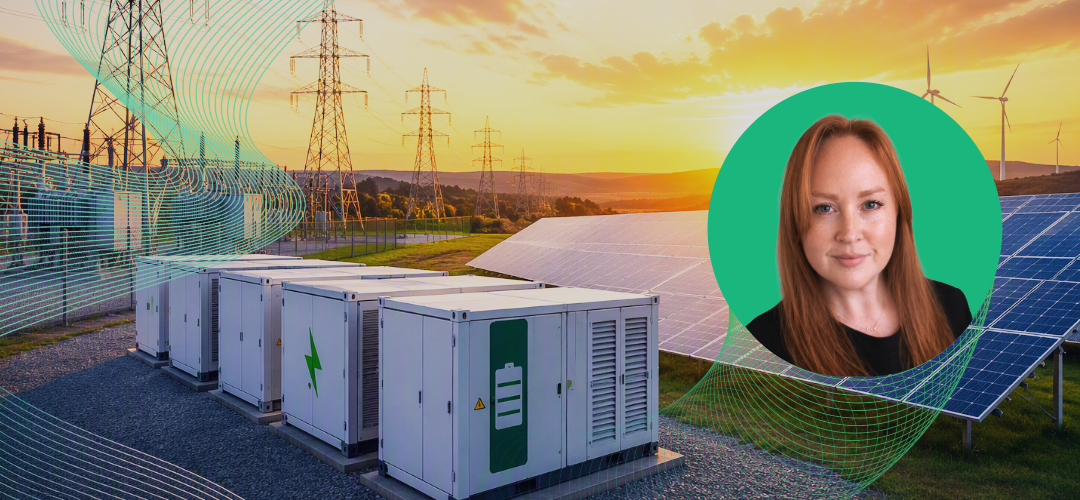
Alongside solar generation, battery energy storage systems have a growing role to play in Britain’s evolving energy landscape.
As renewable generation grows, storage technologies can help provide greater flexibility across the network by storing electricity when generation is abundant and making it available when demand increases. This capability grows more valuable as the energy system changes.
Battery storage can support grid stability, improve efficiency, help manage pressure on parts of the network and help maximise the value of renewable energy generation.
Rather than viewing generation, storage and infrastructure as separate challenges, it is more useful to see them as parts of the same solution, as together they create a more responsive, resilient and efficient energy system.
Battery storage is not a complete solution on its own. Different technologies provide different services and durations of storage. Countries will need a combination of batteries, stronger networks, flexible demand, interconnection and other sources of dependable capacity.
Generation is only part of the answer
The current debate surrounding net zero, balancing costs, grid constraints and energy security risks overlooking a crucial point.
Europe’s energy transition is progressing rapidly. Renewable generation continues to grow, while the electrification of transport, heating, industry and emerging technologies is expected to place additional demand on the electricity system in the years ahead.
Meeting that demand will require more generation capacity, but it will also require smarter networks, greater storage capability and continued investment in the infrastructure that underpins the entire energy system. These should not be viewed as competing priorities – they are all part of the same challenge.
The events we are witnessing across Europe today remind us that resilience matters. Building resilient energy systems means taking a broader view of how energy is produced, transported, stored and consumed.
Nations’ energy futures will not be shaped by one technology alone. They will depend on how effectively renewable generation, battery storage, grid infrastructure and localised energy solutions work together.
As Europe continues to adapt to changing economic, environmental and energy challenges, success will be measured not only by how much clean electricity we generate, but by how effectively we can deliver, store and use it.
Four weeks into my role, this is the conversation I want us to be having. The more I’ve learned about Europe’s energy systems, including that of the UK, where I live, the more I’ve been struck by their complexity. What can seem straightforward from the outside is, in reality, an intricate network of technologies, infrastructure and people working together every day to keep the country powered. That experience has reinforced my belief that people deserve a clear and evidence-led conversation about what different technologies can achieve, where their limitations lie and why supporting infrastructure is needed.
We must explain these decisions clearly. We must also listen to the communities, businesses and consumers affected by them.
The future of energy is not simply about generation. It is about building a system resilient enough to support the decades ahead.